HTB Academy - Networking Proxies
HTB Academy - Networking Proxies: Dedicated Proxy / Forward Proxy The Forward Proxy, is what most people imagine a proxy to be. A Forward Proxy is when a client makes a request to a computer, and that computer carries out the request. • HTB Academy • htb-academy, module34
Dedicated Proxy / Forward Proxy
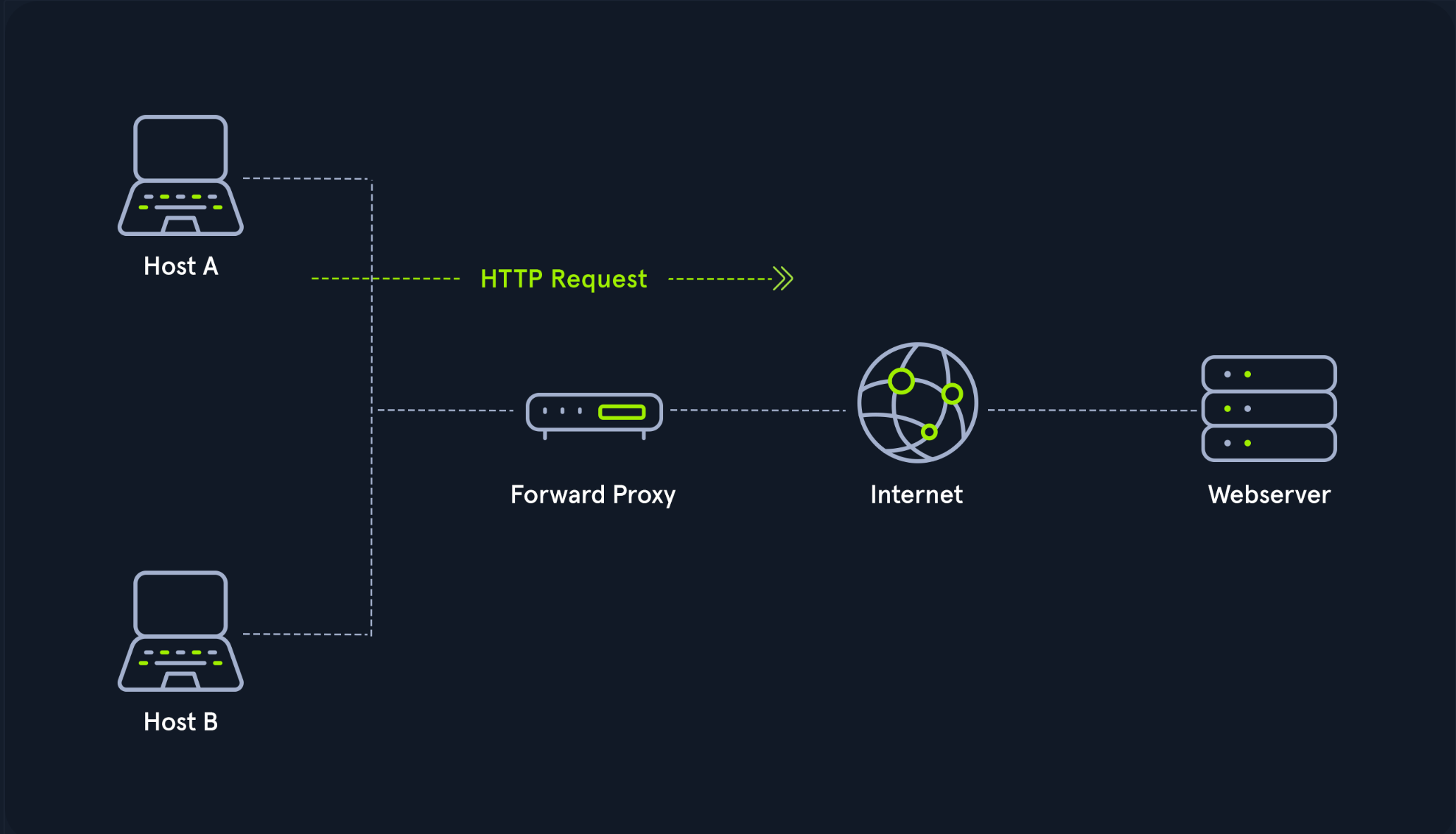
The Forward Proxy, is what most people imagine a proxy to be. A Forward Proxy is when a client makes a request to a computer, and that computer carries out the request.
For example, in a corporate network, sensitive computers may not have direct access to the Internet. To access a website, they must go through a proxy (or web filter). This can be an incredibly powerful line of defense against malware, as not only does it need to bypass the web filter (easy), but it would also need to be proxy aware or use a non-traditional C2 (a way for malware to receive tasking information). If the organization only utilizes FireFox, the likelihood of getting proxy-aware malware is improbable.
Web Browsers like Internet Explorer, Edge, or Chrome all obey the "System Proxy" settings by default. If the malware utilizes WinSock (Native Windows API), it will likely be proxy aware without any additional code. Firefox does not use WinSock and instead uses libcurl, which enables it to use the same code on any operating system. This means that the malware would need to look for Firefox and pull the proxy settings, which malware is highly unlikely to do.
Alternatively, malware could use DNS as a c2 mechanism, but if an organization is monitoring DNS (which is easily done using Sysmon ), this type of traffic should get caught quickly.
Another example of a Forward Proxy is Burp Suite, as most people utilize it to forward HTTP Requests. However, this application is the swiss army knife of HTTP Proxies and can be configured to be a reverse proxy or transparent!
Reverse Proxy
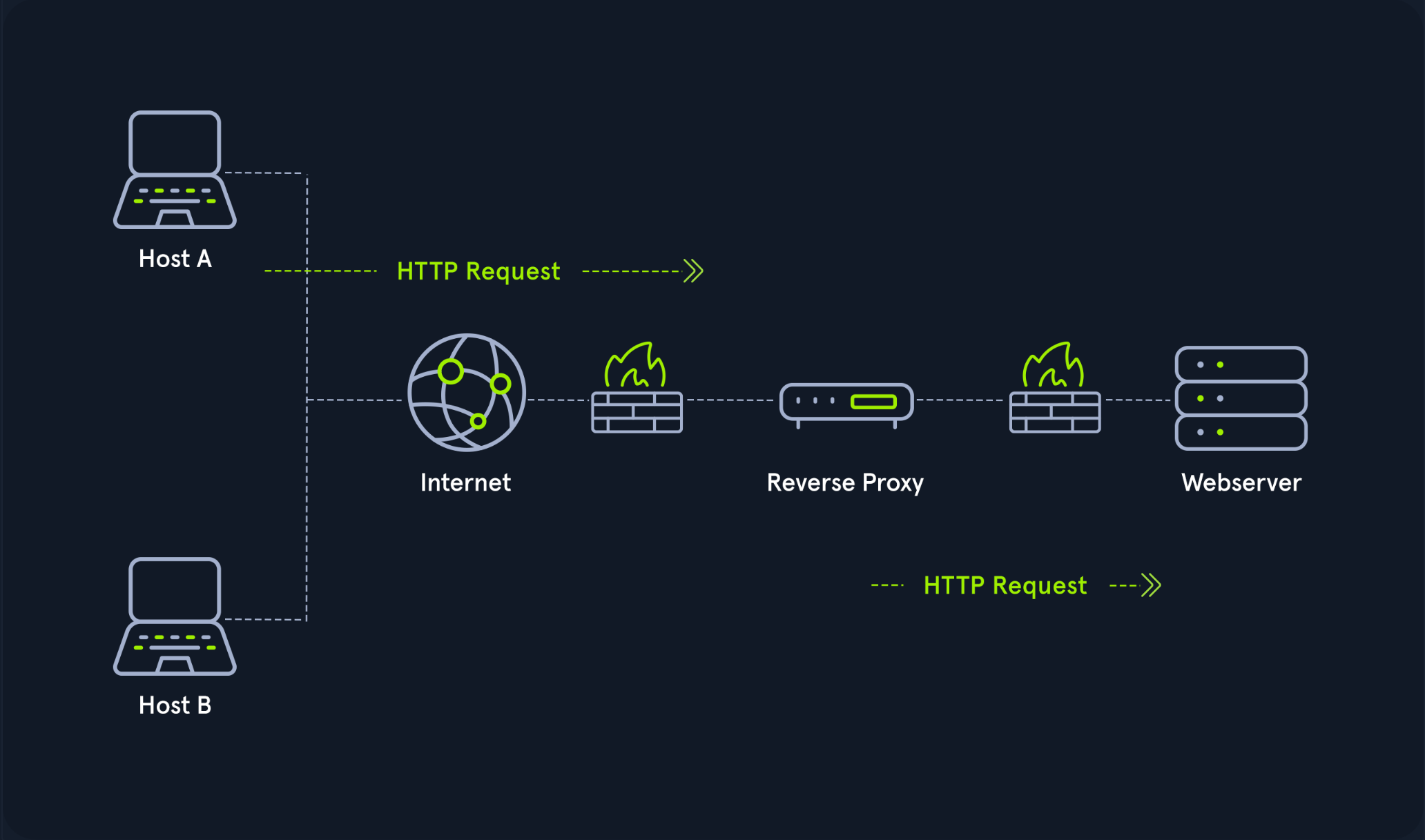
As you may have guessed, a reverse proxy, is the reverse of a Forward Proxy. Instead of being designed to filter outgoing requests, it filters incoming ones. The most common goal with a Reverse Proxy, is to listen on an address and forward it to a closed-off network.
Many organizations use CloudFlare as they have a robust network that can withstand most DDOS Attacks. By using Cloudflare, organizations have a way to filter the amount (and type) of traffic that gets sent to their webservers.
Penetration Testers will configure reverse proxies on infected endpoints. The infected endpoint will listen on a port and send any client that connects to the port back to the attacker through the infected endpoint. This is useful to bypass firewalls or evade logging. Organizations may have IDS (Intrusion Detection Systems), watching external web requests. If the attacker gains access to the organization over SSH, a reverse proxy can send web requests through the SSH Tunnel and evade the IDS.
Another common Reverse Proxy is ModSecurity, a Web Application Firewall (WAF). Web Application Firewalls inspect web requests for malicious content and block the request if it is malicious. If you want to learn more about this, we recommend reading into the ModSecurity Core Rule Set, as its a great starting point. Cloudflare, also can act as a WAF but doing so requires letting them decrypt HTTPS Traffic, which some organizations may not want.
Comments
Comments
Loading comments…